Shifting Scales from International to Subnational – a comparative analysis of India and Germany’s Federal Water Governance
September 23, 2025
The Transboundary Rivers Ecologies and Development Studies (TREADS) Initiative has an MoU with the NMCG (National Mission for Clean Ganga) to pursue a collaborative research programme for improving the outcomes of the Namami Gange Programme (NGP) and informing policy thinking and institutional transformation about rejuvenating India’s rivers. One of these projects aims to engage critically with the European experiences of rejuvenating rivers, with a particular focus on the Rhine and its well-documented and celebrated success story.
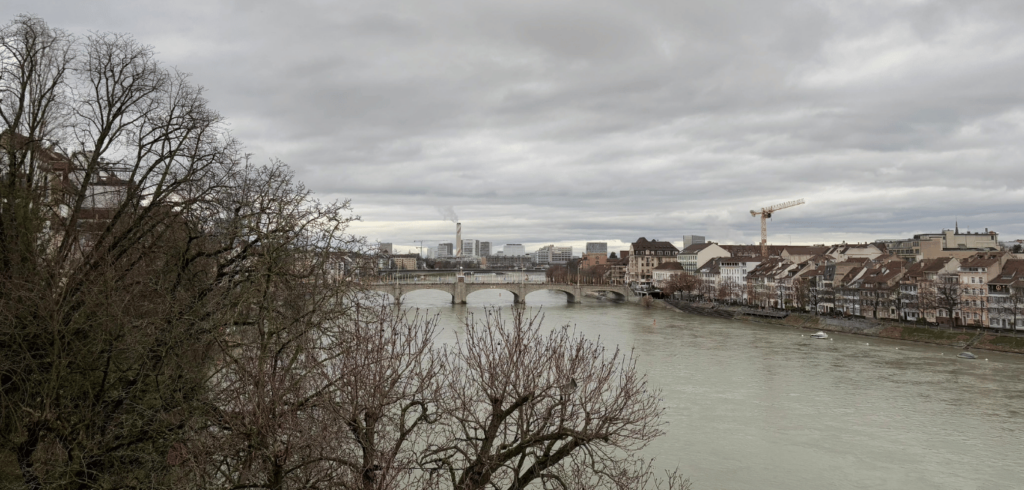
Europe’s river rejuvenation is not just about water, but it is the story of the transformation of Europe as a region where environmental concerns got equal footing along with trade and commerce in the formation of the EU – from European Coal and Steel Community (ECSC) to the present-day European Union (EU).
We created this repository to understand the complex and interlinked processes through which river basin management evolved in European nations - eventually culminating in the adoption of the EU-wide Water Framework Directive (WFD). We attempt to capture this transformative story by taking the Rhine restoration programme as a case study and trace how the restoration programme is deeply embedded in the evolution of the EU treaties (with incremental steps in making environment a major area of policy intervention and subsequent changes in the legal competence of the European Commission to play a more constructive role in the regional water policies). The Rhine experience itself has set a precedent for its distinct context with collective mobilization built on navigation and trade interdependencies. The International Commission for the Protection of the Rhine (ICPR) could build on this history of interdependencies that further supplemented the EU water and environmental policies.
To ground our understanding of the European experience of river rejuvenation and the Rhine in particular, we have chronologically traced the key treaties and legislations with two objectives in mind. First, to showcase the incremental legislative and policy process of European unification – moving from the narrowly focused trade relations towards wide-ranging political, economic, and environmental aspects. Second, it underlines how ‘environment’ and ‘water’ has featured in the subsequent European treaties that made possible the regional water and environmental management frameworks in EU.
Overall, the database is a first step towards recognizing the distinctly contrasting context, and the long history of policy and institution building efforts that contributed to the much-celebrated outcomes of river rejuvenation in Europe. This is also a step towards collating learnings on the larger theme of transboundary river water governance for enduring impact - applicable for federal rivers in India – while contrasting it with experiences of the Namami Gange Programme (NGP) in India.
The objective of the repository is to have a chronological and holistic view of legislations starting from the post-World War II period in 1950 to the European Union as it is today. Second, we focused on the Rhine experience and the historical, institutional, political, and legislative instruments starting from the year 1804 that made the Rhine story an exemplary case of river rejuvenation. Third, we show how the 11 Rhine Basin states transformed and transposed their existing domestic water legislations and river management institutions to implement the EU-wide Water Framework Directive. Fourth, we briefly unpack the provisions of the EU WFD, and lastly, we show the evolution of India’s own river rejuvenation journey, with a particular focus on the Ganges to highlight the contrasting experiences in India.
The order in which we will upload the database is as follows:
The objectives and important provisions included in the database are taken directly from the official treaty documents and the link for the same has been included in the database as well.
The Treaty of 15 October 1804, governing the “octroi” or toll levied for using the Rhine, was concluded by the French Empire and the Holy Roman Empire of the German Nation in accordance with the General Rescript of 25 February 1803 issued by the Empire’s deputation, and it abolished the various tolls in existence on the Rhine in favour of the institution of a Rhine toll.This treaty established an international administration in Mainz responsible for centralising the tolls levied on vessels using the Rhine, which were to be used to improve navigability and the state of the towpaths, as well as for settling disputes arising from the prescription of the “octrois”.
With Napoleon's defeat, the idea of freedom of navigation on the major rivers of Europe was introduced where Rhine was declared to be free to all persons, not just the nationals or riparian states.
Signed on: 23 April 1814 between Charles of Bourbon, Count of Artois, as Lieutenant General of the Realm, and the allies.
Napoleon had abdicated as Emperor on 6 April, as a result of negotiations at Fontainebleau.
The Treaty laid down the principle of the freedom of navigation on the major international rivers of Europe.
As part of the Final Document of the Congress of Vienna, the establishment of a Central Commission (CCNR) was agreed upon. This Central Commission, with its headquarters located in Mainz, consisted of representatives from the states that bordered the Rhine River.
Signed on: 9 June 1815 (nine days before the Battle of Waterloo).
The present mandate of the Central Commission is substantially the same as that defined in Annex 16B to the Final Act of the Congress of Vienna. Its main function is to ensure the observance of such principles as freedom of navigation and equality of treatment.
For 15 years, the Central Commission (CCNR) functioned as a standing diplomatic conference and established as agreed in 1831. Commission played an important part in coordinating work on regulating the Rhine, gradually reducing tolls, setting up rules for navigation, and promoting navigation on the Rhine.
Signed on: March 31, 1831.
The Convention of Mainz was adopted, establishing a number of the first laws governing Rhine navigation
This convention confirms the principle of the freedom of navigation on the Rhine and makes the Central Commission responsible for drawing up a convention specifically intended to implement this principle."
The convention lays down the principle of the conservation, maintenance and improvement of the navigable waterway of the Rhine. This convention broadened the scope of authority to encompass all aspects related to the "prosperity" of navigation on the Rhine River.
Signed on: October 17, 1868.
Parties: The Convention of Mannheim was signed by Baden, Bavaria, France, Hesse, the Netherlands and Prussia.
As part of the post-World War I settlement, the Treaty of Versailles included provisions for environmental protection along the Rhine River. It aimed to prevent pollution and improve water quality and enlarged to include representatives of non-riparian states.
Signed on: June 28, 1919 - Peace agreement that officially ended World War I.
The Treaty reorganised the Central Commission which was involved in the work to canalise the Upper Rhine and monitored the economic situation of navigation on the Rhine.
Introduced by Schuman Declaration by France on 9 may 1950.
It was created after World War II to integrate Europe's coal and steel industries into a single common market based on the principle of supranationalism.
Founding members: France, West Germany, Italy, the Netherlands, Belgium and Luxembourg.
Signed: 18 April 1951 |Entered into force: 23 July 1952 | Expired: 23 July 2002
Purpose: to create interdependence in coal and steel so that one country could no longer mobilise its armed forces without others knowing. This eased distrust and tensions after WWII. The ECSC treaty expired in 2002.
ECSC was the first step in securing a lasting peace.
It was established for the benefit of the Rhine and of all waters running into the Rhine. The Rhine ecosystem is to be sustainably developed. Rhine water shall continue to be apt for drinking water production. The quality of Rhine sediments is to be improved such that dredged material may be deposited without causing any environmental harm. Holistic flood prevention and protection taking into account ecological requirements.ICPR was Established in 1950, and amended in 1963 and 1999.
• Members: Switzerland, France, Germany, Luxemburg, the Netherlands, European Union. [Cooperation with Austria, Liechtenstein, Wallonia (Belgium)]
• It is a De-centralised organization.
• The Legal framework is provided by EU Directives (WFD and FD) and national legislation.
• All agreements by consensus.
• Measures as recommendations to countries
• Obligation to report on the implementation of measures
• Small neutral Secretariat, 4 languages.
• ICPR is composed of delegations appointed by its members, with each delegation serving as chair and appointing the presiding Chairman for three years in turn.
It established 2 treaties - Treaty establishing the European Community by establishing the European Economic Community (EEC) & the European Atomic Energy Community (EAEC or Euratom).
Founding members: Belgium, Federal Republic of Germany, France, Italy, Luxembourg, the Netherlands.
Signed: 25 March 1957 | Entered into force: 1 January 1958
Purpose: to set up the European Economic Community (EEC) and the European Atomic Energy Community (Euratom).
Main changes: extension of European integration to include general economic cooperation.
Euratom was created to:
i. promote research and disseminate technical information;
ii. set uniform safety standards to protect the public and industry workers;
iii. facilitate research & ensure civil nuclear materials are not diverted to other uses, particularly military.
EEC was designed to create a common market among its members through the elimination of most trade barriers and the establishment of a common external trade policy.
It created the European Development Fund.
All three Communities merged together - EEC, Euratom & ECSC. With 142 Members, the new assembly met for the first time in Strasbourg on 19 March 1958 as the ‘European Parliamentary Assembly’, changing its name to the ‘European Parliament’ on 30 March 1962.Before the introduction of direct elections, Members of the European Parliament (MEPs) were appointed by each of the Member States’ national parliaments. All MEPs thus had a dual mandate. The summit conference held in Paris on 9 and 10 December 1974 determined that direct elections ‘should take place in or after 1978’. In Jan 1975, Parliament adopted a new draft convention, concerning the election of the representatives of the Assembly by direct universal suffrage which was
signed in Brussels in 1976. Following ratification by all Member States, the Act entered into force in July 1978, and the first elections took place on 7 and 10 June 1979.
It was originally only a consultative body.
The idea of a European parliamentary assembly which would express European public opinion was set out at the Hague Congress of May 1948.Official Journal C 326 , 26/10/2012 P. 0001 - 0390
Intergovernmental organisation by the EFTA Convention, that promotes free trade and economic integration between its members, within Europe and globally.
The main objective of the Association was to liberalise trade among its Member States, and the Convention thus contained basic rules regarding free trade in goods and related disciplines.
Background:
Signed on: 4 January 1960; in Stockholm.
In 1958, following the failure of negotiations between the Member States of the Organisation for European Economic Cooperation (OEEC) to conclude an agreement on a free trade area, the main concern of the countries that were not members of the new European Economic Community (EEC) was to avoid being left on the sidelines of Western European economic integration. They therefore decided to establish their own convention.
ICPR got a status under international law after 13 years of its foundation. The riparian countries shared the “the concern to keep the Rhine clean, to avoid further contamination and to improve its present state and were convinced of the urgency of this task“.
It outlines the detailed tasks of ICPR, i.e.
- investigate into the state of the Rhine,
- propose restoration measures,
- prepare international conventions and
- work on mandates given by Ministers' Conferences.
Treaty of Brussels establishing a Single Council and a Single Commission of the European.
(ECSC + EEC + Euratom)
The European Communities was established as a result of the merger of the institutions set up by the ECSC, the EEC and the Euratom.
Signed: 8 April 1965 | Entered into force: 1 July 1967
Purpose: to streamline the European institutions.
Main changes: creation of a single Commission and a single Council to serve the then three European Communities (EEC, Euratom, ECSC).
It merged the executives, keeping the 3 communities legally independent, the Merger Treaty rationalised their institutions by merging their then still independent executive bodies.
Treaty of Brussels establishing a Single Council and a Single Commission of the European.
(ECSC + EEC + Euratom)
The European Communities was established as a result of the merger of the institutions set up by the ECSC, the EEC and the Euratom.
Background:
Signed: 8 April 1965 | Entered into force: 1 July 1967
Purpose: to streamline the European institutions.
Main changes: creation of a single Commission and a single Council to serve the then three European Communities (EEC, Euratom, ECSC).
It merged the executives, keeping the 3 communities legally independent, the Merger Treaty rationalised their institutions by merging their then still independent executive bodies.
It's aim is to consider the need for a common outlook and for common princIples to inspire and guide the peoples of the world in the preservation and enhancement of the human environment.
First major UN meeting to deal with environmental issues and to declare that the right to live in a healthy environment as a basic right.
This convention led UNEP {United Nations Environment Programme} to coordinate global action for the protection and preservation of the environment in December 1972.The convention adopted a basic declaration containing a set of common principles to aid the people in protecting and conserving the environment. It gave a detailed resolution for financial and institutional arrangements for environmental protection. Also, an action plan containing 109 recommendations. This aims to identify and quantify the environmental problems, warn about any crisis, and to adopt supporting measures, by establishing an Earthwatch. At the end of the convention 26 principles were adopted and declared by the participating states. This is known as the Magna Carta of the human environment.
The aim of a Community environment policy is to improve the setting and quality of life, and the surroundings and living conditions of the peoples of the Community. It must help to bring expansion into the service of man by procuring for him an environment providing the best conditions of life, and reconcile this expansion with the increasingly imperative need to preserve the natural environment.The Heads of State or of Government meeting in Paris at the Summit Conference on 19 and 20 October 1972 emphasized the importance of a Community Environmental Policy and to this end invited the Community Institutions to establish, before 31 July 1973, a programme of action accompanied by a precise timetable.
Main objectives are:
1. The prevention, reduction and containment of environmental damage.
2. The conservation of an ecological equilibrium.
3. The rational use of natural resources.The first EAP defined environmental principles such as the Polluter Pays Principle and recognised that prevention was better than cure.
Second Budgetary Treaty:
Brussels treaty on the subject of financial budgetry, strengthens the Parliament’s powers.
The Treaty changed the landscape of financial services of the budget of EU.
It again amended certain financial provisions laid down in the Treaties. It strengthened the Assembly's budgetary powers (the EP secures the right to reject the Community budget and to grant discharge to the Commission in respect of implementation of the budget) and provided for the establishment of a Court of Auditors.
Signed on: 22 July 1975.
In Brussels, the Member States of the Europe of the Nine sign this Treaty which provides for the establishment of a Court of Auditors and strengthens the European Parliament's budgetary powers. These reforms proved necessary following the implementation of the financial system of own resources, which established the financial autonomy of the European Communities.
2nd EAP was a follow up to the first EAP in terms of approach and objective, with simply a greater range of problems to be dealt with Nature Protection received special attention.
3rd EAP tried to provide an overall strategy for protecting the environment and natural resources in the European Community.EAP-2 was basically a continuation of the EAP 1 which mainly focus on water and air: drinking water quality, water protection, waste prevention of water, air quality and protection.
EAP 3 was carried out from 1982 to 1986 and the main focus of its concerns was the Internal Market and how it was “influenced by environmental policies through the risks and benefits that accrue to them”.
Convention on the Protection of the Rhine against Pollution with Chlorides aimed at reducing the salt load in three steps. Mainly, the sodium chloride was supposed to be injected into deeper subsoil layers.
Signed on 3 December 1976.
Only the first phase, the reduction of the MDPA discharges by 20 kg/s into the Rhine during ten years took effect on 5 January 1987 and has been implemented.
In the second phase, a reduction of the salt discharges by 60 kg/s was planned. The implementation of this second phase was rejected by the 9th Conference of Rhine Ministers on 10 October 1988 as too inefficient and too costly. This slackened the further implementation of the Chloride Convention.
A major fire at a chemical warehouse led to the release of large quantities of toxic chemicals into the Rhine River. The Sandoz accident served as a catalyst for increased international cooperation and efforts to address pollution in the Rhine River. After a fire at a Sandoz AG warehouse near Basel on November 1, 1986, firefighting water mixed with up to thirty tons of pesticides flowed into the Rhine, killing fish and other organisms along hundreds of kilometers. This disaster sparked public solidarity from Switzerland to the Netherlands and led to increased pressure on governments, boosting the influence of the ICPR. In response, ministers adopted the ambitious "Rhine Action Programme" to cut dangerous chemical discharges by half within 10 years and restore the river for salmon. The Sandoz accident marked a pivotal moment for environmental and water protection in the Rhine.
After the catastrophic chemical spill in Rhine, a restoration programme was introduced by ICPR to address the environmental damage caused and to prevent future incidents of pollution in the Rhine River.
4th EAP to give substance to the new obligations for integration of the environmental dimension into other Community policies by emphasizing four areas of activity:
1. Effective implementation of existing Community legislation.
2. Regulation of all environmental impacts of ‘substances’ and ‘sources’ of pollution.
3. Increased public access to and dissemination of information.
4. Job creation. A number of major modifications were made to Rhine tributaries to make dams more surmountable for fish, in particular by the construction of fish passes and ladders.
ICPR launched this initiave to restore the salmon population in the Rhine River by the year 2000.
It aimed to amend and update the founding treaties of the European Communities to further integrate and strengthen the EEC. Its main objective was to establish the single market, eliminate barriers to trade, promote economic cooperation, and enhance competitiveness within the European Community. It marked a significant step towards the completion of the internal market within the EU
Signed: 17 February 1986 (Luxembourg) / 28 February 1986 (The Hague) | Entered into force: 1 July 1987
Purpose: to reform the institutions in preparation for Portugal and Spain's membership and speed up decision-making in preparation for the single market.
Main changes: extension of qualified majority voting in the Council (making it harder for a single country to veto proposed legislation), creation of the cooperation and assent procedures, giving Parliament more influence.
The Single European Act of 1986 enhanced Parliament’s role in certain legislative areas (cooperation procedure), and made accession and association treaties subject to its assent. Parliament’s powers were strengthened by: Making Community agreements on enlargement and association agreements subject to Parliament’s assent; Introducing a procedure for cooperation with the Council, which gave Parliament real, albeit limited, legislative powers; it applied to about a dozen legal bases at the time and marked a watershed in turning Parliament into a genuine co-legislator.
It reduced the number of policy areas for which unanimity was required in order to adopt legislation. Qualified majority voting replaced unanimity, which includes environmental policy.
It was signed for fixing the chlorides concentration at the German-Dutch border to 200 mg/l at maximum. On the one hand, the additional protocol provided for a further reduction of the MDPA discharges in France during low discharge (beyond the 20 kg/s of the 1st phase) and, on the other hand, the surplus water from the polder Wieringermeer was to be bypassed into the Wadden Sea.
The ICPR contracting parties Switzerland, Germany, France, Luxemburg and the Netherlands jointly financed both measures.
The EEC becomes the European Community(EC). The EP's legislative and supervisory powers increase with the introduction of the co-decision procedure (ordinary legislative procedure) and extension of the co-operation procedure. It introduces the concept of European citizenship.
Under the new Treaty, the European Parliament has the right to invite the Commission to present a legislative proposal on matters which, in its view, call for a Community act to be drawn up.
Signed: 7 February 1992 | Entered into force: 1 November 1993
Purpose: to prepare for European Monetary Union and introduce elements of a political union (citizenship, common foreign and internal affairs policy). Main changes: establishment of the European Union and introduction of the co-decision procedure, giving Parliament more say in decision-making. New forms of cooperation between EU governments – for example on defence and justice and home affairs.
The Treaty marked the beginning of ‘a new stage in the process of creating an ever-closer union among the peoples of Europe’ by giving the previous communities a political dimension. It established an overall uniformity across Europe, creating an integration of government bodies creating a streamlined umbrella framework across the continent and making bilateral treaties lose their significance.
The Treaty by establishing the EU and by introducing the codecision procedure in certain areas of legislation and extending the cooperation procedure to others, marked the beginning of Parliament’s metamorphosis into the role of co-legislator. It gave Parliament the power of final approval over the membership of the Commission: this represented an important step forward in terms of Parliament’s political control over the EU executive.
This Treaty made the environment an official EU policy area, introduced the codecision procedure and made qualified majority voting in the Council the general rule.
It also established the European Central Bank (ECB) and the European System of Central Banks and describes their objectives. The main objective for the ECB is to maintain price stability, i.e. to safeguard the value of the euro. The Treaty also established rules on how the euro would work in practice. This included specifying what a country needs to do to join the euro area.
The adoption of the UNECE Water Convention created a stand-alone legal framework for transboundary water cooperation for the European continent and required the conclusion of specific basin agreements by parties.
It aimed at protecting the marine environment of the Northeast Atlantic. It encourages the sustainable use of marine resources, seeks to protect and conserve marine ecosystems, habitats, and species, promoting the conservation of biodiversity. it is administered by the OSPAR Commission, which includes representatives from 16 Contracting Parties, including European Union member states and Norway.
Signed in 1992 and entered into force in 1998.
It amends the EU Treaty by identifying the EU objectives of the promotion of employment, improved living and working conditions, and proper social protection, immigration, and civil judicial policy to the community’s jurisdiction, etc.
Key Changes in respect to Environment:
1. The introduction of 'Sustainable development' into the Treaty language, a process that started already with the TEU.
2. It highlights the various changes relating to the legal harmonisation within the EU.
3. It presents the amendments affecting the European Union's environmental policy in the narrow sense.
Signed: 2 October 1997 | Entered into force: 1 May 1999
Purpose: To reform the EU institutions in preparation for the arrival of future member countries.
Main changes: amendment, renumbering and consolidation of EU and EEC treaties. More transparent decision-making (increased use of the ordinary legislative procedure).
The Treaty of Amsterdam extended the codecision procedure to most areas of legislation and reformed it, making Parliament a co-legislator on an equal footing with the Council. The appointment of the President of the Commission was made subject to Parliament’s approval, thus increasing its powers of control over the executive.
WFD has been the main law for water protection in Europe. It applies to inland, transitional and coastal surface waters as well as groundwaters. It ensures an integrated approach to water management, respecting the integrity of whole ecosystems, including by regulating individual pollutants and setting corresponding regulatory standards. It is based on a river basin district approach to make sure that neighbouring countries cooperate to manage the rivers and other bodies of water they share.
The aim of the Treaty of Nice was to reform the institutional structure of the European Union to with stand the challenges of the new enlargement. With the Treaty of Nice, Parliament's legislative and supervisory powers are increased and qualified-majority voting is extended to more areas within the Council.
Signed: 26 February 2001 | Entered into force: 1 February 2003.
Purpose: to reform the institutions so that the EU could function efficiently after reaching 25 member countries.
Main changes: methods for changing the composition of the Commission and redefining the voting system in the Council.
Parliament’s legislative and supervisory powers were increased and qualified majority voting was extended to more areas in the Council.
It completes the process started by the Treaty of Amsterdam (1999) & by the Treaty of Nice (2001), enhancing the efficiency and democratic legitimacy of the Union and to improving the coherence of its action.
Signed: 13 December 2007 | Entered into force: 1 December 2009
Purpose: to make the EU more democratic, more efficient and better able to address global problems, such as climate change, with one voice.
Main changes: More power for the European Parliament, change of voting procedures in the Council, citizens' initiative, a permanent president of the European Council, a new High Representative for Foreign Affairs, a new EU diplomatic service.
The Lisbon treaty clarifies which powers:
- belong to the EU
- belong to EU member countries
- are shared.
TFEU constituted another important extension of both the application of qualified majority voting in the Council (using a new method as of 1 November 2014 – Article 16 TEU) and the application of the codecision procedure (now extended to some 45 new legislative domains). This ‘ordinary legislative procedure’ became the most widely used decision-making procedure, covering all important policy areas of the TFEU (Article 294 – ex Article 250 TEC). Parliament’s role in the preparation of future treaty amendments also became more significant (Article 48 TEU). Moreover, as part of the Treaty of Lisbon (and, initially, as part of the unsuccessful draft treaty establishing a constitution for Europe), the Charter of Fundamental Rights of the European Union, which was signed by the Presidents of Parliament, the Commission and the Council at the European Council in Nice on 7 December 2000, became legally binding (4.1.2).
With the European elections of 23 to 26 May 2019, it became clear that Parliament had made full use of the provisions of Article 14 TEU, which states that ‘the European Parliament shall, jointly with the Council, exercise legislative and budgetary functions. It shall exercise functions of political control and consultation as laid down in the Treaties. It shall elect the President of the Commission’.
This Treaty forms the detailed basis of EU law by defining the principles and objectives of the EU and the scope for action within its policy areas. It also sets out organisational and functional details of the EU institutions.Treaty of Rome was previously known as the Treaty Establishing the European Community (TEC) when 1992 Treaty Removed the word Economic in EEC. In 2009, the Treaty of Lisbon renamed it the "Treaty on the Functioning of the European Union" where the consolidated TFEU consists of seven parts. [Effective - 1 January 1958 (1 December 2009 under its current name)]
Article 194: In the context of the establishment and functioning of the internal market and with regard for the need to preserve and improve the environment, Union policy on energy shall aim, in a spirit of solidarity between Member States, to:
(a) ensure the functioning of the energy market;
(b) ensure security of energy supply in the Union;
(c) promote energy efficiency and energy saving and the development of new and renewable forms of energy; and
(d) promote the interconnection of energy networks.
Key point in TEFU - The Parliament is the sole institution of the EU directly elected by EU citizens, for EU citizens. It therefore represents close to 450 million EU citizens and in this sense embodies democratic power. It has its seat in Strasbourg, France. MEPs are elected for a term of 5 years by direct election (since 1979) in a free and secret ballot, with a set number from each Member State. The Parliament, as it is known nowadays, is actually the result of the merger of the three former assemblies of the ECSC, EEC and the EURATOM (1965 Merger Treaty).
Legal Basis (Environment): Articles 11 and 191 to 193. The EU is competent to act in all areas of environment policy, such as air and water pollution, waste management and climate change. Its scope for action is limited by the principle of subsidiarity and the requirement for unanimity in the Council in the fields of fiscal matters, town and country planning, land use, quantitative water resource management, choice of energy sources and structure of energy supply.
Its objective is to promote economic and social progress for their peoples, taking into account the principle of sustainable development and within the context of the accomplishment of the internal market and of reinforced cohesion and environmental protection, and to implement policies ensuring that advances in economic integration are accompanied by parallel progress in other fields.
Its objective:
- To promote research and disseminate technical information.
- Setting uniform safety standards to protect the public and industry workers.
- To facilitate research.
The Charter is a legally binding document. It includes civil and political rights as well as economic, social and cultural rights. Moreover, it benefits from the strength of EU law, which often has direct effect and, in principle and unlike international law, must be granted supremacy over national law.